If you operate in hardware-driven sectors such as robotics, aerospace, space or advanced manufacturing, credibility is everything. Your website is not a brochure; it is your proof of capability to investors, partners, customers, procurement teams and future acquirers.
Common website challenges in hardware engineering
Whether you’re in R&D seeking funding or selling hardware components or engineering services – the goal is the same: you need a website that moves with your business through every stage of growth. But in many cases, especially with websites built on all-in-one platforms like WordPress, you may find yourself held back by their limitations, such as:
- Multiple subsidiary websites create duplication of work
- Stale webpage content that is hard to refresh or update
- Plugin-heavy setups that slow the site and create a messy editor experience
- Difficulty scaling into new markets or languages without expensive redevelopment
- Inability to adapt messaging for different sectors or regulatory frameworks
- Technical content trapped as PDFs, such as whitepapers and datasheets, instead of discoverable content
- Lack of visibility in search and AI chatbots, limiting inbound leads
- A sales process that is manual and labour-intensive, disconnected from the tools your team prefers
What this guide will show you
I’ll show how Composable Architecture gives you the strategic flexibility across your website(s) to:
- Tailor your narrative for investors and VCs by launching industry-specific landing pages quickly
- Publish technical content once and distribute it across every channel and locale automatically
- Shift seamlessly from R&D to commercial deployment by integrating quote-based or wholesale workflows
- Adapt to new markets and regulatory frameworks by localising messaging and your business offering
- Test defence focused messaging privately, while keeping climate-facing positioning public
- Promote product USPs without exposing sensitive IP
- Support region-sensitive hardware sales with gated access and tiered pricing
All of this is achievable and scalable from a seed-funded R&D startup right through to commercial deployment without costly rebuilds. But to do so, you do need to start with the right foundation. And that’s where Composable Architecture comes in.
What is Composable Architecture?
All in one tools like Wordpress force everything into a single platform. This is risky, especially in fast moving sectors – not only are you locked-in, you’re limiting future functionality and workflows that are supported by it – hence the minefield of third party bug ridden plugins. This is why companies who have fallen into this trap end up having to rebuild when they evolve.
Composable Architecture removes this challenge, by diversifying your website requirements across smaller, more manageable Cloud services which are connected by universal APIs. These components can then be:
- Replaced without rebuilding the whole site
- Reused across multiple channels
- Scaled independently as your business grows
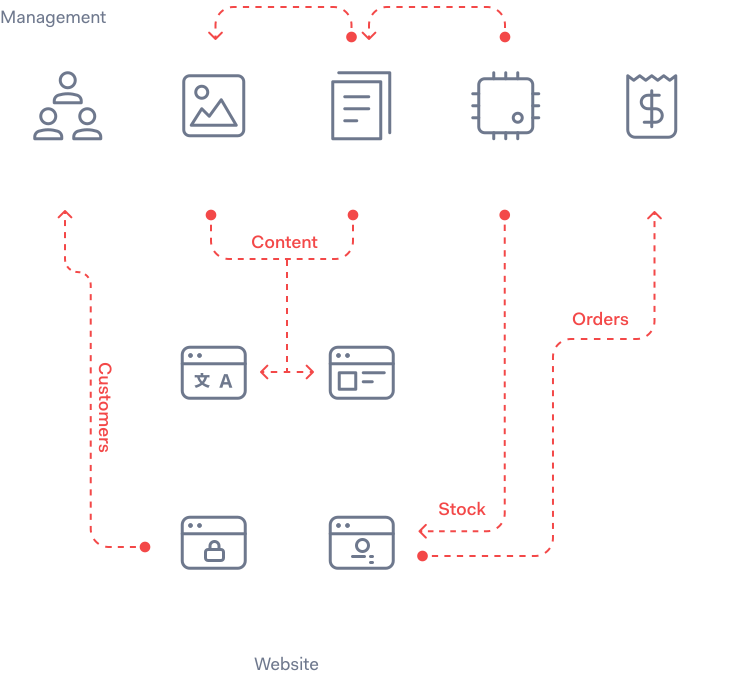
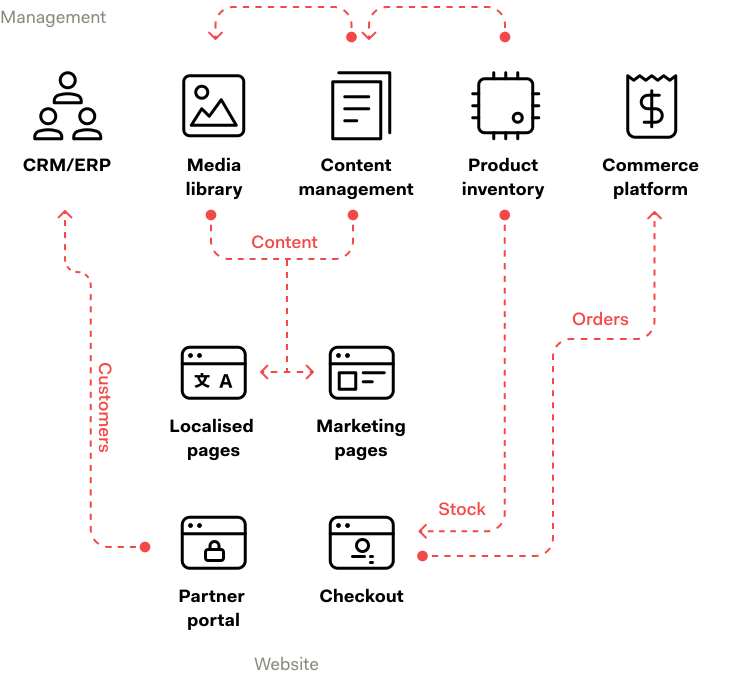
Figure: How a composable architecture works
The result is a website that evolves incrementally; not one that requires a disruptive rebuild at every funding round.
Headless vs Composable
You may have heard the term “headless”. Headless refers to separating content from presentation, typically via a headless CMS. It allows content to remain structured, portable and reusable. This is a crucial part of a composable architecture, but composable goes further.
Composable applies that same principle across your entire digital stack – content, commerce, CRM and operations – so no single system becomes a bottleneck.
Shift from R&D to commercial deployment without rebuilding
An engineering business evolves in stages. Composability allows you to keep website costs down at the start and expand capability as the business grows. With a traditional platform like Wordpress, that’s just not realistic and you’ll have to re-build each time you business needs changes.
Here’s how a composable website might evolve:
At R&D stage:
- Structured content that can grow and be developed iteratively
- A memorable, investor-facing front-end capable of gaining credibility with the right VCs in a high stakes sector
- Lead capture that is simple and easy to manage
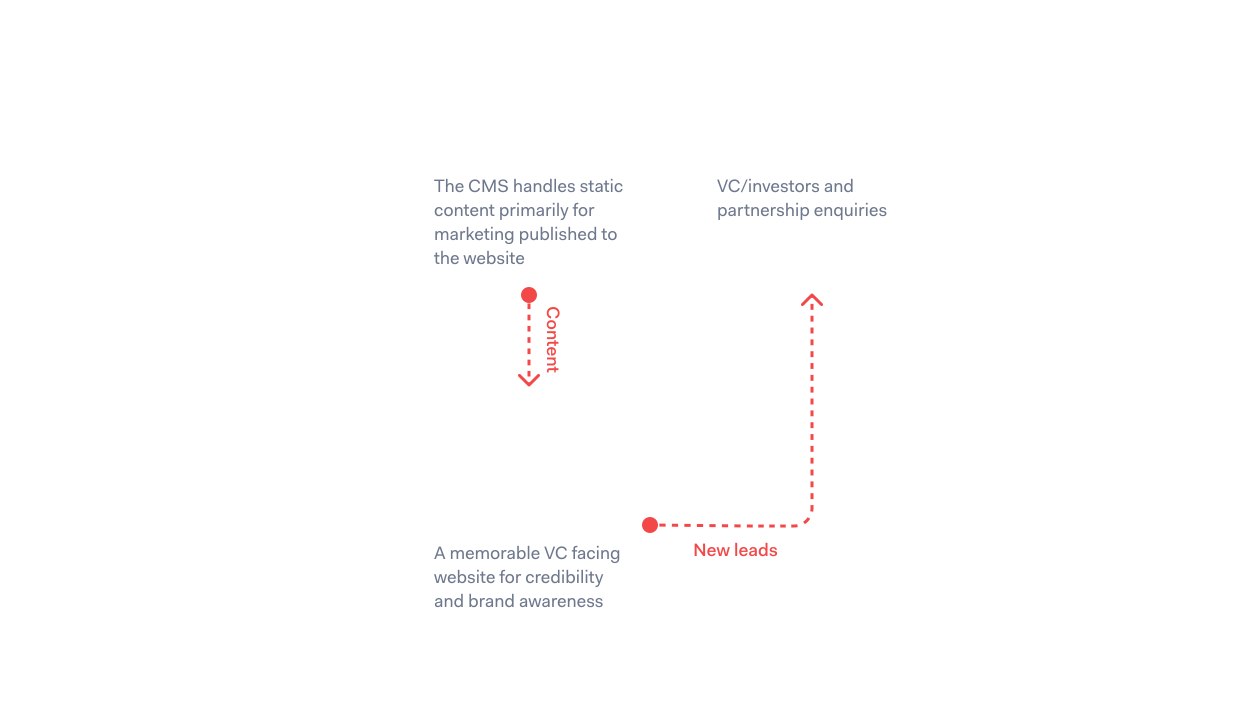
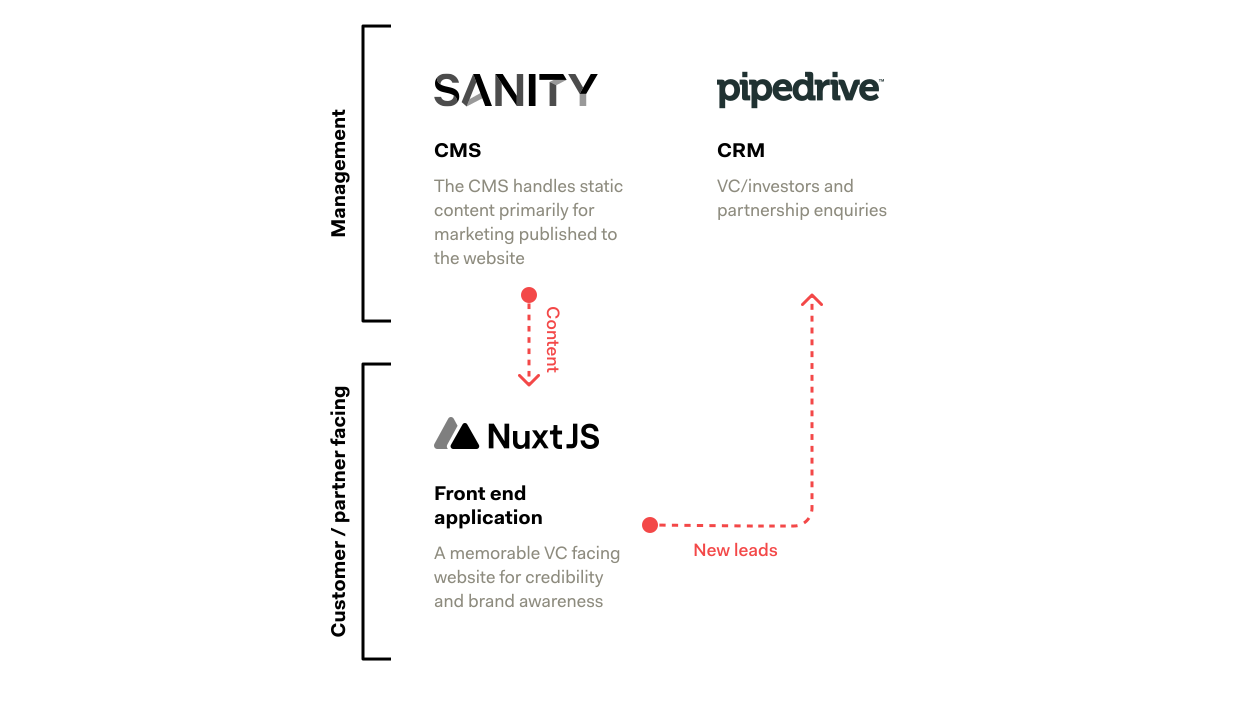
Figure: Example of an entry level, affordable composable architecture
At commercialisation:
- “Add to quote” workflows designed around your unique pricing models
- Localisation and regulatory compliance as you enter new markets
- ERP or CRM integrations to support operational growth
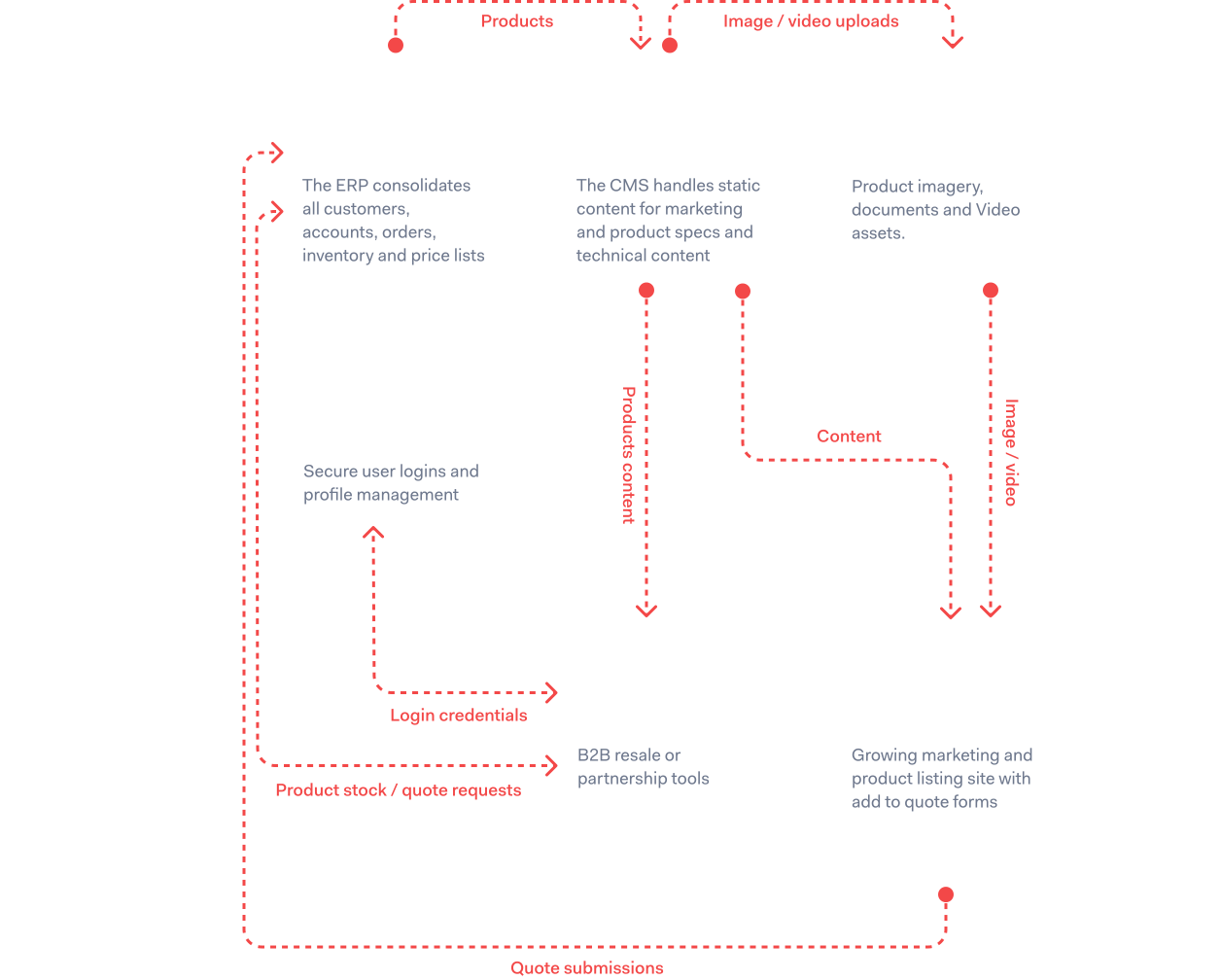
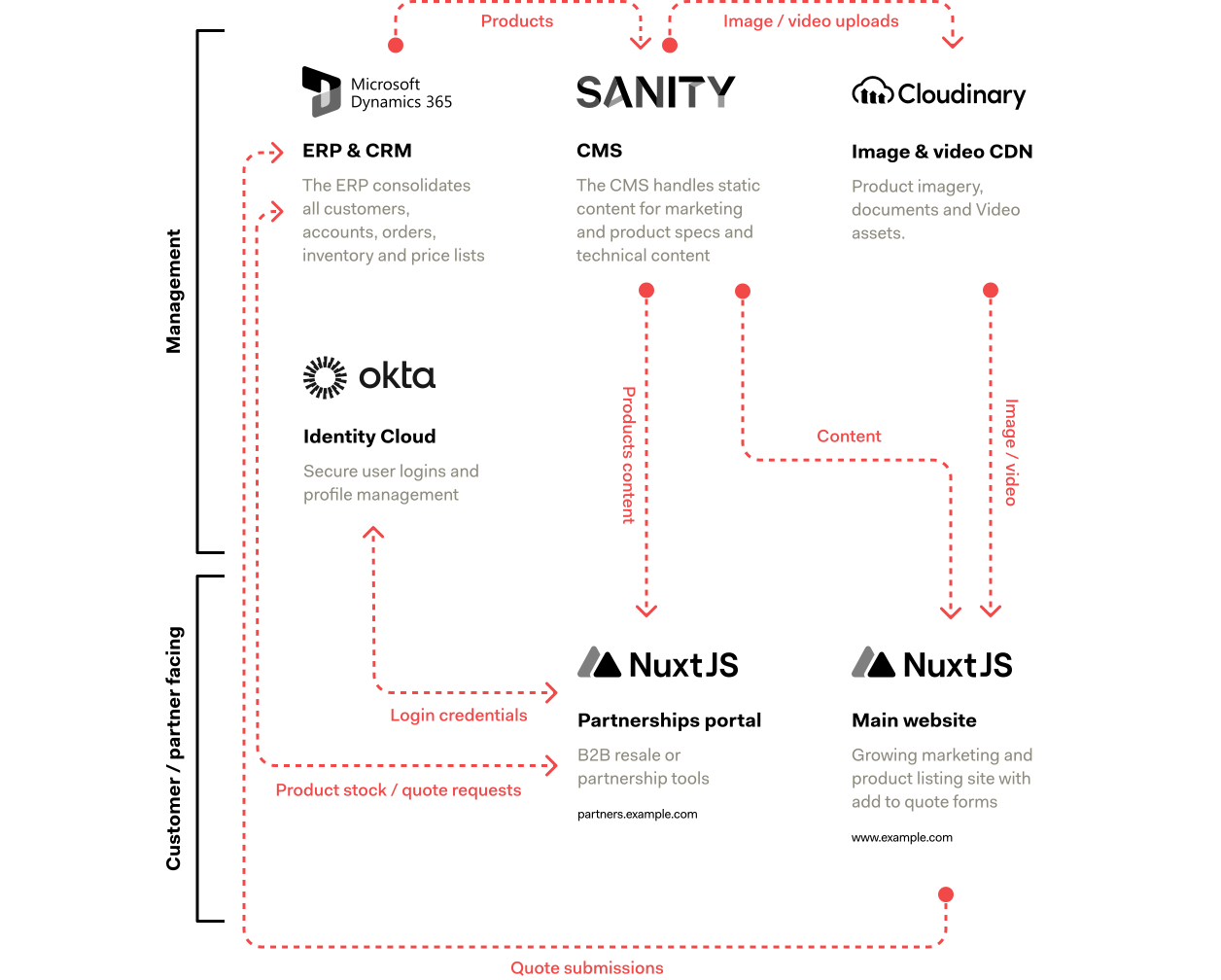
Figure: Example of a growing composable architecture
At enterprise stage:
- Expanded B2B commerce capability for on-site transactions, unburdening your sales team from handling retail requests
- System upgrades aligned with increasing operational complexity
- Scaled media hosting for documentation and product video/imagery
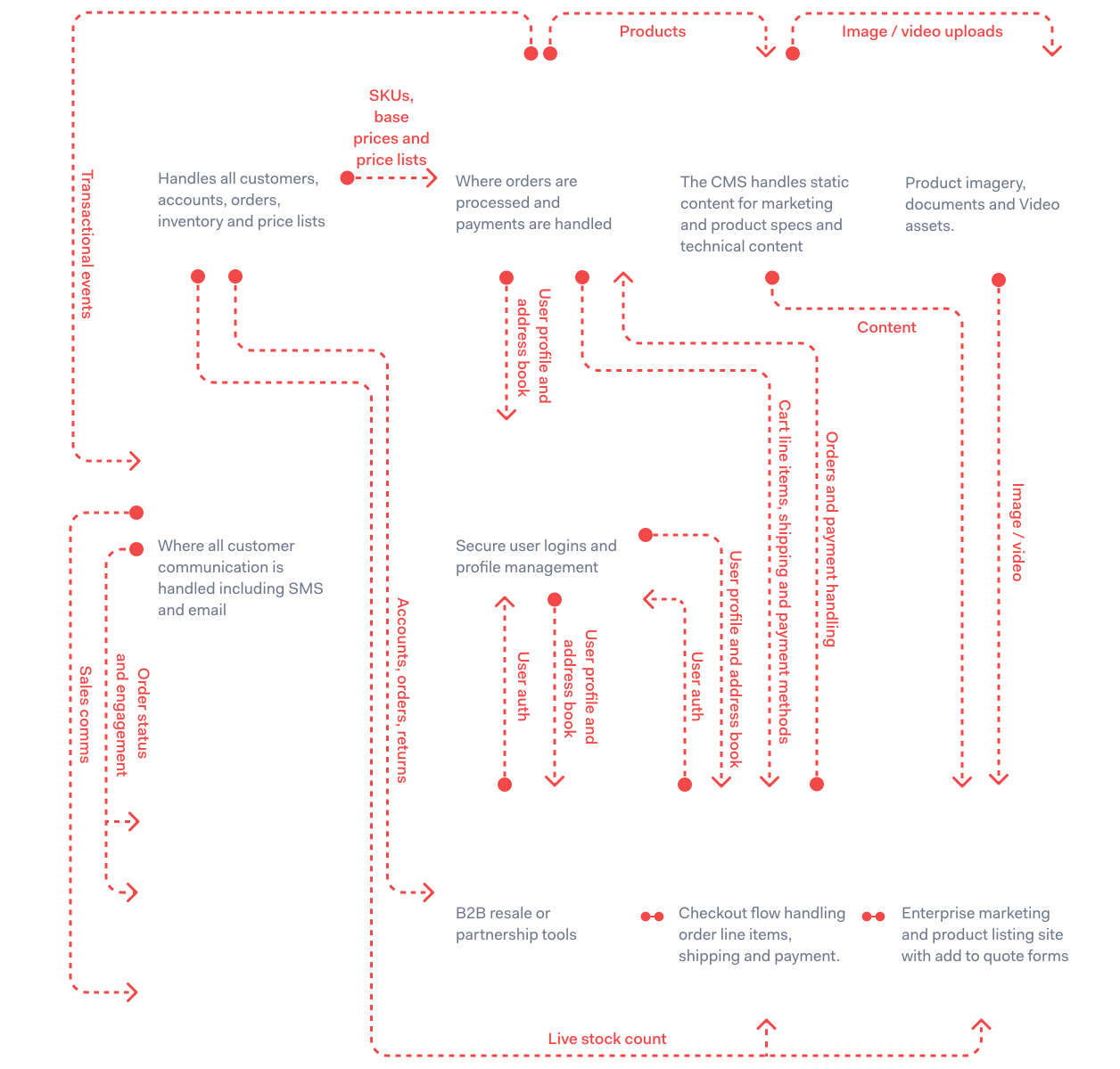
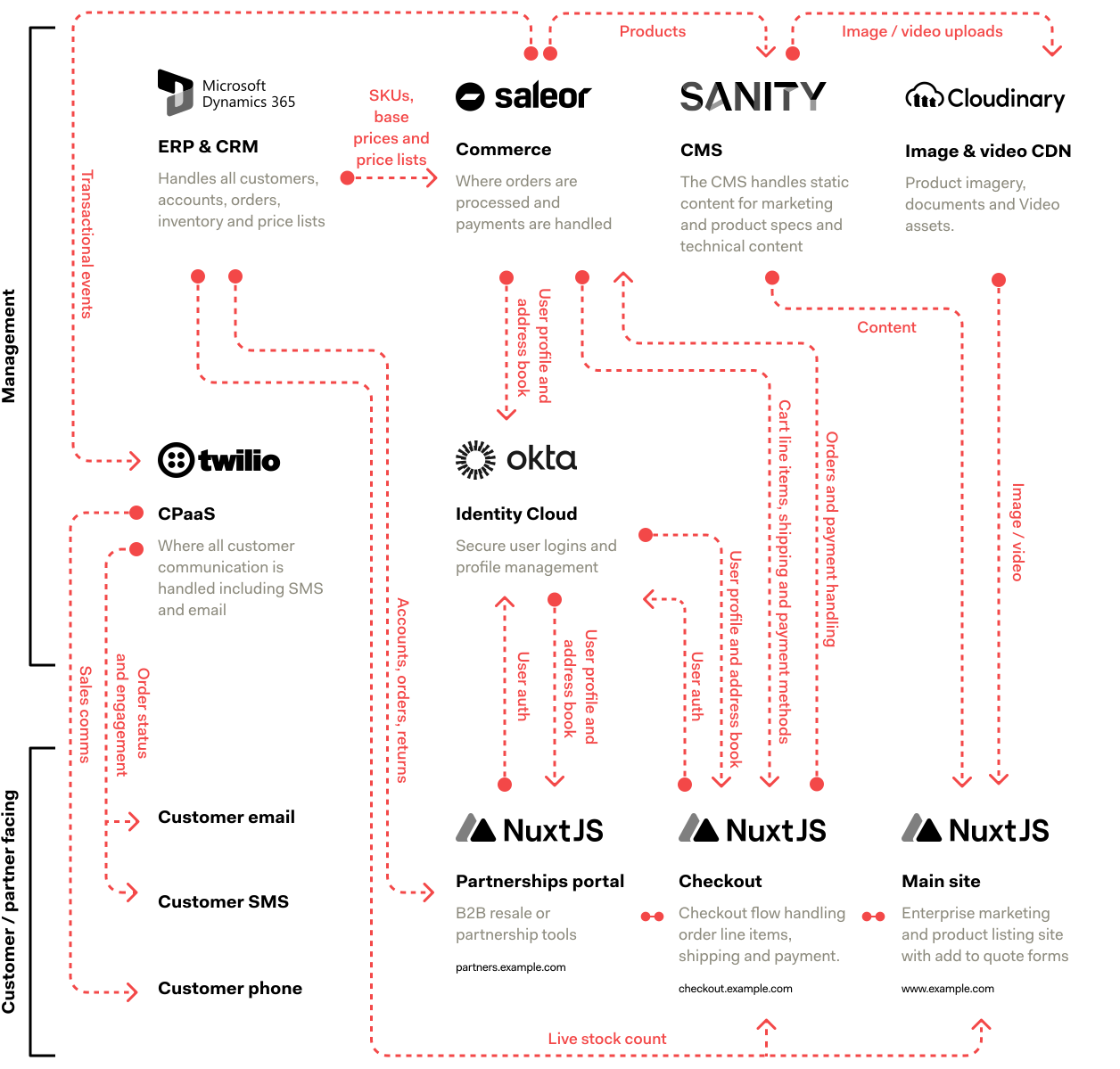
Figure: Example of a composable architecture at scale
With composable architecture, the foundation remains stable. Only the necessary components evolve, allowing your momentum to continue uninterrupted.
Structure your content for search and AI
In hardware and advanced engineering, domain authority matters. And AI is playing a huge part in how engineers shop for hardware components, or conduct their research. If your website is not cited on popular AI systems like Claude, Gemini or ChatGPT there is risk that your business may quickly fall behind.
A headless CMS like Sanity within a composable setup, structures your content ensuring:
- Search engines rank your products highly
- AI systems index and cite your technical content
- Machine-readable product specifications, datasets and documentation
This content can then be rendered using the appropriate SEO schema markup, in line with the most up-to-date best practices – for example:
This is not about chasing algorithms. It is about making your expertise visible and discoverable.
Publishing Technical Content Without Friction
White papers, research reports and technical updates often fall to the bottom of the priority list. Not because they lack value, but because publishing white papers is often an operational burden – many websites fail to deliver the results that makes them worth doing in the first place.
A structured, headless CMS not only speeds up the publishing process but also increases their lifespan:
- Publish once and distribute across every channel
- Centralise datasets, specifications and media globally across multiple instances, preventing inconstant and outdated values
- Maintain brand cohesion across markets
- Refresh messaging without duplicating effort
The result is consistency and market dominance, without additional burden.
Refresh, Rebrand and white-label Without Disruption
As your hardware business matures, your brand and website will evolve. You may also need to offer your partners the ability to resell your services or products under their own domain.
The very nature of composability is built on APIs so you’ll already have the infrastructure in place to so to spin up white-labelled subsidiaries sharing the same content. You can even give some partners secure access to your products and technical documentation APIs. And when it comes to refreshing your website you can simply replace the front end without touching your content and other architectural infrastructure.
Case study
Advatek™, a global manufacturer of professional LED control hardware, faced this exact challenge.
Their monolithic ecommerce platform had become a constraint. Content, B2B and B2C commerce, operations and marketing were all competing inside a single system.
We replaced this with a composable setup, separating responsibilities across specialised systems connected via APIs.

The result:
- Faster performance
- Greater flexibility
- Independent scaling of commerce and content
- Removal of long-term vendor lock-in
The platform now supports both global B2B clients and a growing B2C audience, without architectural friction.
Todd has demonstrated both technical competence as well as a true understanding of, and commitment to, our requirements and objectives.David Christensen – Marketing Director at Advatek™
Final Thought
Hardware businesses move through distinct phases – R&D, funding, commercialisation, scale, acquisition.
Your website should move with you.
If it requires rebuilding every time your business evolves, it is not an asset. It is a liability.
Composable architecture turns your website into long-term infrastructure – adaptable, scalable and aligned with commercial momentum.